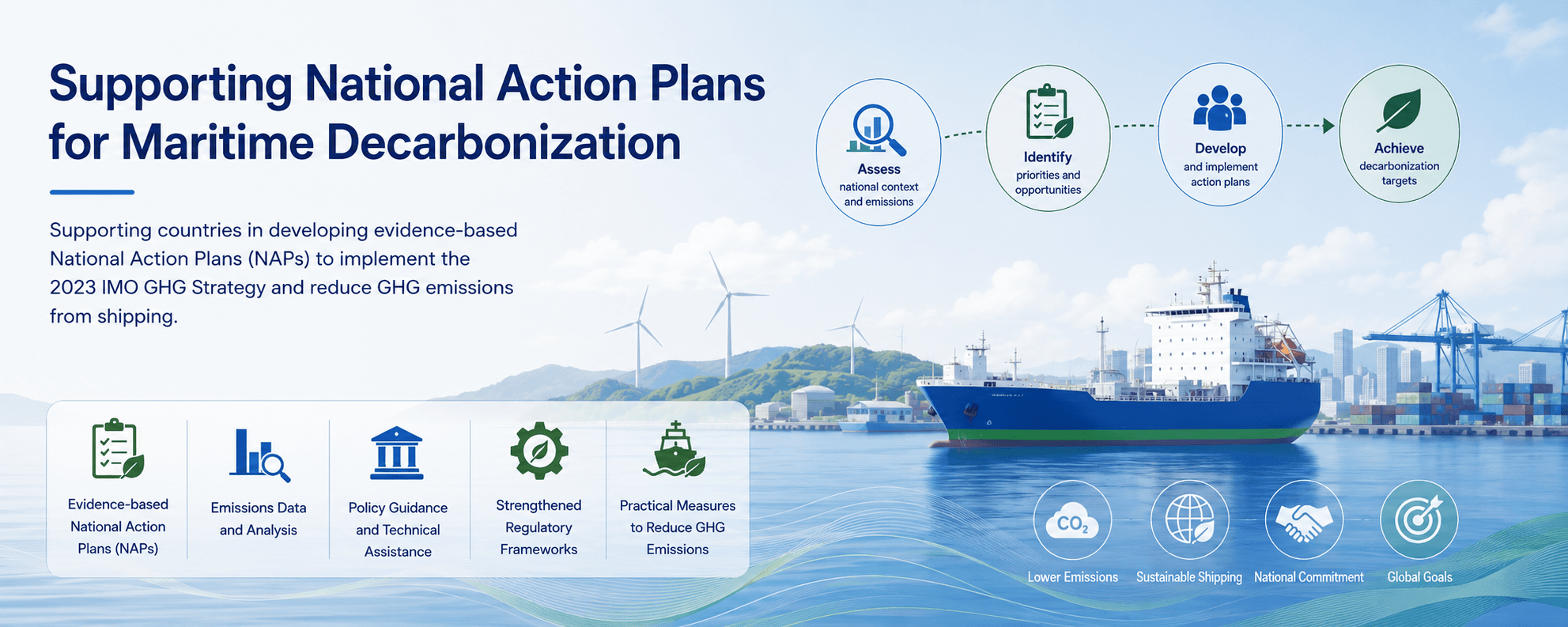



1 Development and implementation of GHG emission data collection/monitoring system, utilizing IMO GHG emission toolkits, to support the development of National Action Plans (NAPs)-
- Identify the needs of the participating member States in terms of GHG emission data collection system using the IMO emission toolkits in the context of IMO’s GHG strategy and National Action Plans (NAPs)
- Consult, develop and implement an emission data collection system to quantify and monitor the GHG emissions from the maritime sector including domestic shipping and ports
- Capacity-building workshops to implement GHG emission data collection system from ports and domestic shipping using IMO emission toolkits. (Training for maritime administrations on maritime emission data collection, Create a component of high GHG Emissions in the RISK matrix, Train flag state inspection officers (FSIO) and port State control officers (PSCO))
2 Analysis of the GHG emission data collected from ports and shipping (including domestic) to identify potential emission reduction measures and technologies that can support their NAPs
- Categorize the vessels in the data management system appropriately based on their technical, operational and emission profiles.
- Assess the potential reduction required to comply with the requirements of the MARPOL Regulations and ambitions as set by the 2023 IMO GHG Strategy.
- Identify the potential technologies appropriate to deliver the potential reductions for vessels in the data management system.
- Support and facilitate engagement of relevant stakeholders (tech providers, financers and tech users) for uptake of identified potential technologies.
3 Evaluation of regulatory and technological needs related to maritime GHG emission reduction ambitions and identification of support to relevant stakeholders (ship/port operators and seafarers) to implement GHG emission regulations
- Assess the existing national regulations and determine areas where existing regulations are insufficient, or inconsistent with international maritime decarbonization ambitions as set by the 2023 IMO GHG Strategy.
- Appraise the challenges and opportunities in response to implementing the maritime GHG emission regulations as required by the MARPOL and support ship/port operators to develop the ‘Implementation plans’ to comply with the maritime GHG emission regulations. Also deliver targeted training programmes for the seafarers through the maritime training institutes of the two countries.