

Asia-Pacific takes steps to strengthen maritime regulatory compliance
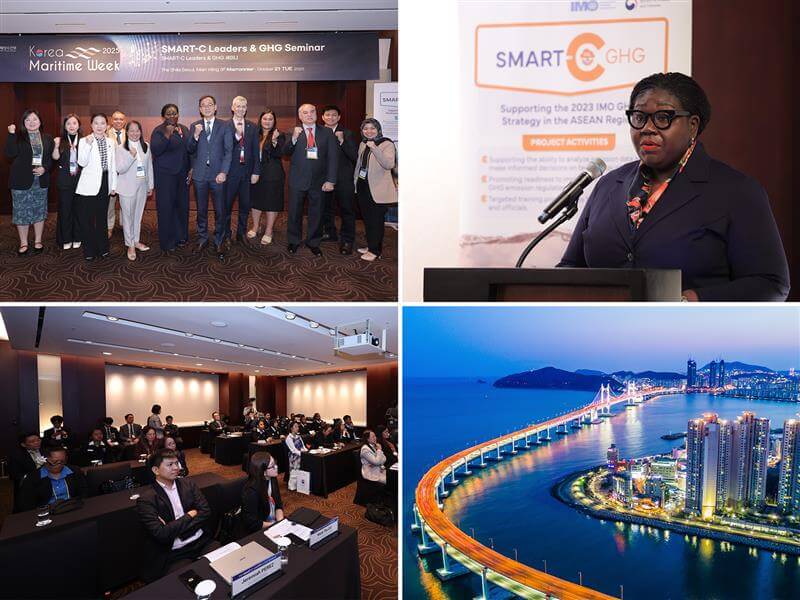
Maritime officials and experts from Asia and the Pacific discussed ways to strengthen compliance with key IMO instruments during a regional seminar during the 2025 Korea Maritime Week held in Busan.
The seminar (21 October) was convened by IMO’s SMART-C Leaders and SMART-C GHG Projects, in collaboration with the Ministry of Oceans and Fisheries (MOF) of the Republic of Korea. The aim was to promote regional collaboration in enhancing compliance with international maritime instruments.
Opening the event, Ms. Azara Prempeh, Director of the Administration Division at IMO underscored the importance of peer-to-peer learning and regional cooperation to ensure that progress towards compliance is sustainable, scalable and replicable across the Asia-Pacific region.
Representatives from the Philippines, Viet Nam, Tonga and Vanuatu, as pilot partner countries of the SMART-C projects, presented best practices and lessons learned in advancing national capacity in this area.
These included the development of digital tools to enhance real-time monitoring and reporting, and the implementation of regional training programmes designed to improve compliance oversight and enforcement practices.
Countries renewed their commitment to collaboration through the SMART-C projects to ensure continuous progress toward compliance with IMO instruments, including the IMO’s 2023 Strategy on the Reduction of GHG Emissions from Ships.
A panel discussion, facilitated by Professor Aykut Ölcer, Director of Maritime Research at the World Maritime University (WMU), further highlighted the role of capacity-building, technology transfer, policy alignment and international cooperation in supporting regulatory compliance and GHG emission reduction efforts.
SMART-C Project partner countries and regional stakeholders shared experiences, highlighted progress, and discussed challenges in strengthening maritime systems. The event promoted cross-regional learning and cooperation, enriching each project and contributing to a stronger, safer, low carbon maritime sector across the regions.